Valorant Rank System Explained: How to Climb Faster
The Valorant competitive ranking system determines how players progress through the game's structured tiers. Understanding its mechanics is critical for any player who wants to advance consistently, regardless of whether they are starting at Iron or attempting to break through Diamond. The system combines visible rank divisions with hidden evaluation metrics, and the relationship between these components dictates how quickly a player climbs. This guide provides a detailed breakdown of the system’s operation, common misconceptions, and actionable strategies for progression.
How the Valorant Ranking System Works
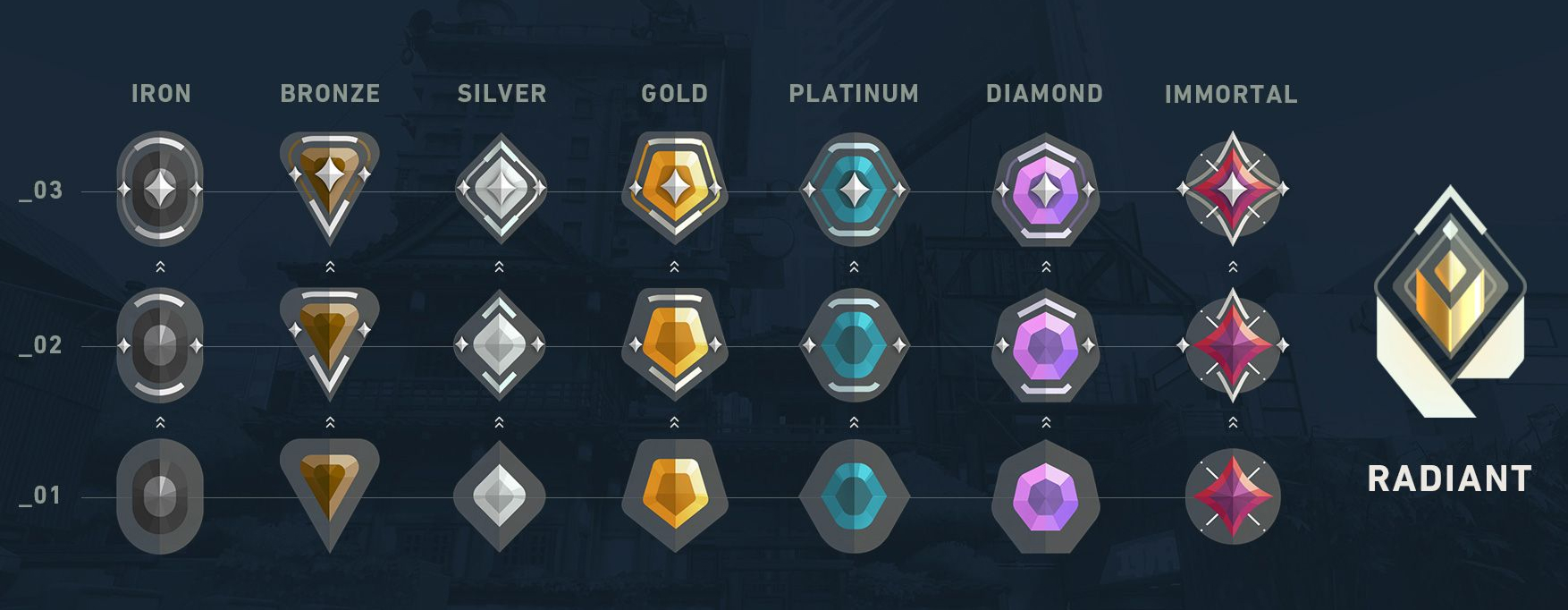
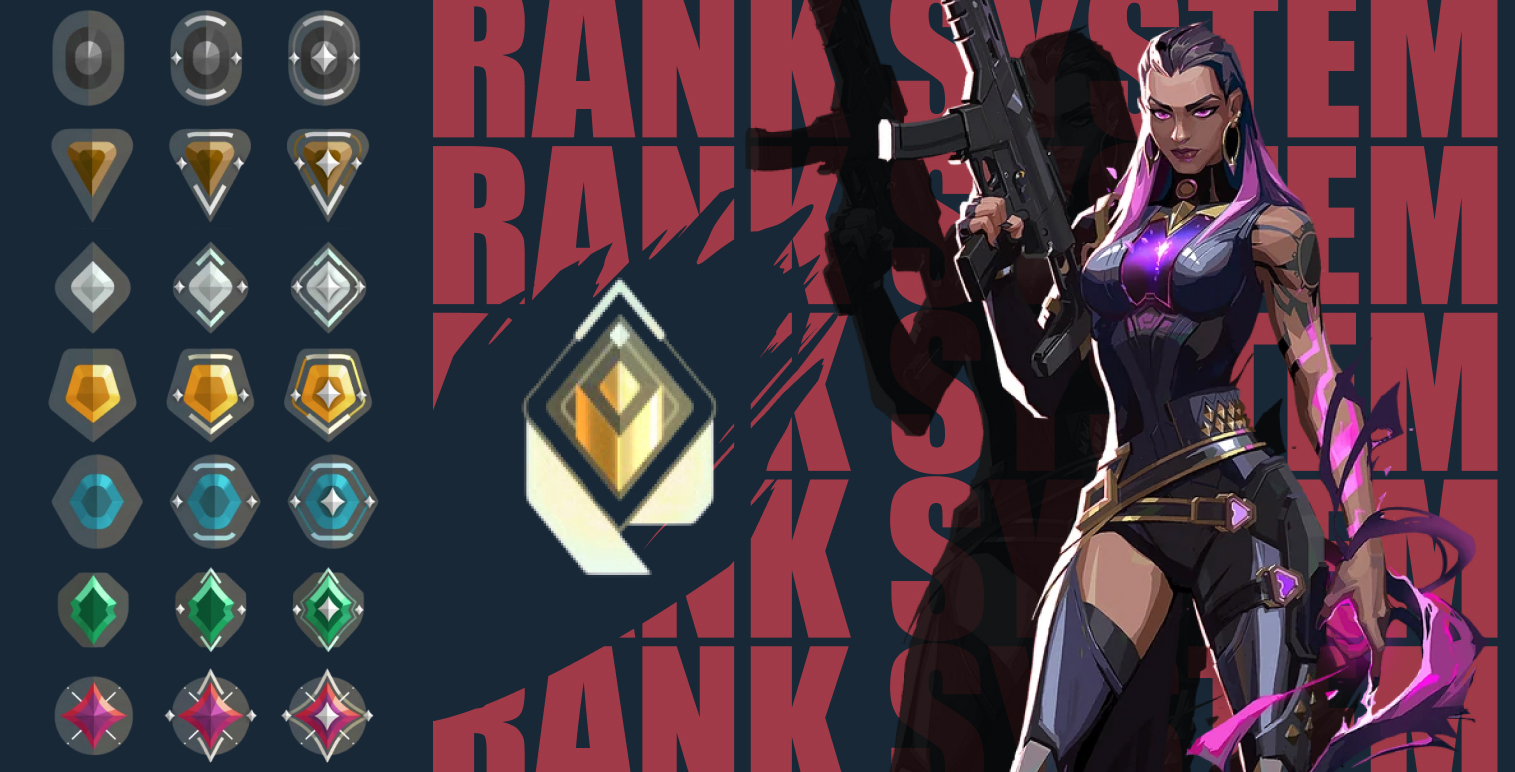
Valorant uses a nine-tier rank structure: Iron, Bronze, Silver, Gold, Platinum, Diamond, Ascendant, Immortal, and Radiant. Each tier except Radiant contains three divisions. A player advances through divisions by accumulating Rank Rating points, commonly called RR. Wins grant RR, with additional points awarded for individual performance metrics. Losses reduce RR. Upon reaching 100 RR within a division, the player enters a promotion game; winning that game moves them to the next division. Losing a promotion game causes a significant RR loss. Seasonal resets occur every Episode, reducing all players' ranks by several divisions to maintain competitive balance and allow the player base to redistribute.
Valorant Rank Overview
| Rank | Typical Skill Level | Common Mistakes | Main Focus to Progress |
|---|---|---|---|
| Iron | Learning fundamentals | Poor aim, movement, positioning | Crosshair placement and basic mechanics |
| Bronze | Basic understanding | Inconsistent decision-making | Economy management and teamwork |
| Silver | Average players | Over-aggression, weak communication | Better positioning and utility usage |
| Gold | Solid fundamentals | Predictable play | Map control and consistency |
| Platinum | Above average | Small mechanical mistakes | Team coordination and adaptability |
| Diamond | Experienced players | Minor tactical errors | Advanced game sense and timing |
| Ascendant | Highly skilled | Limited mistakes | Refining strategy and consistency |
| Immortal | Elite players | Execution under pressure | Team play and decision-making |
| Radiant | Top competitive level | Continuous optimization | Maintaining peak performance |
What Is MMR in Valorant?
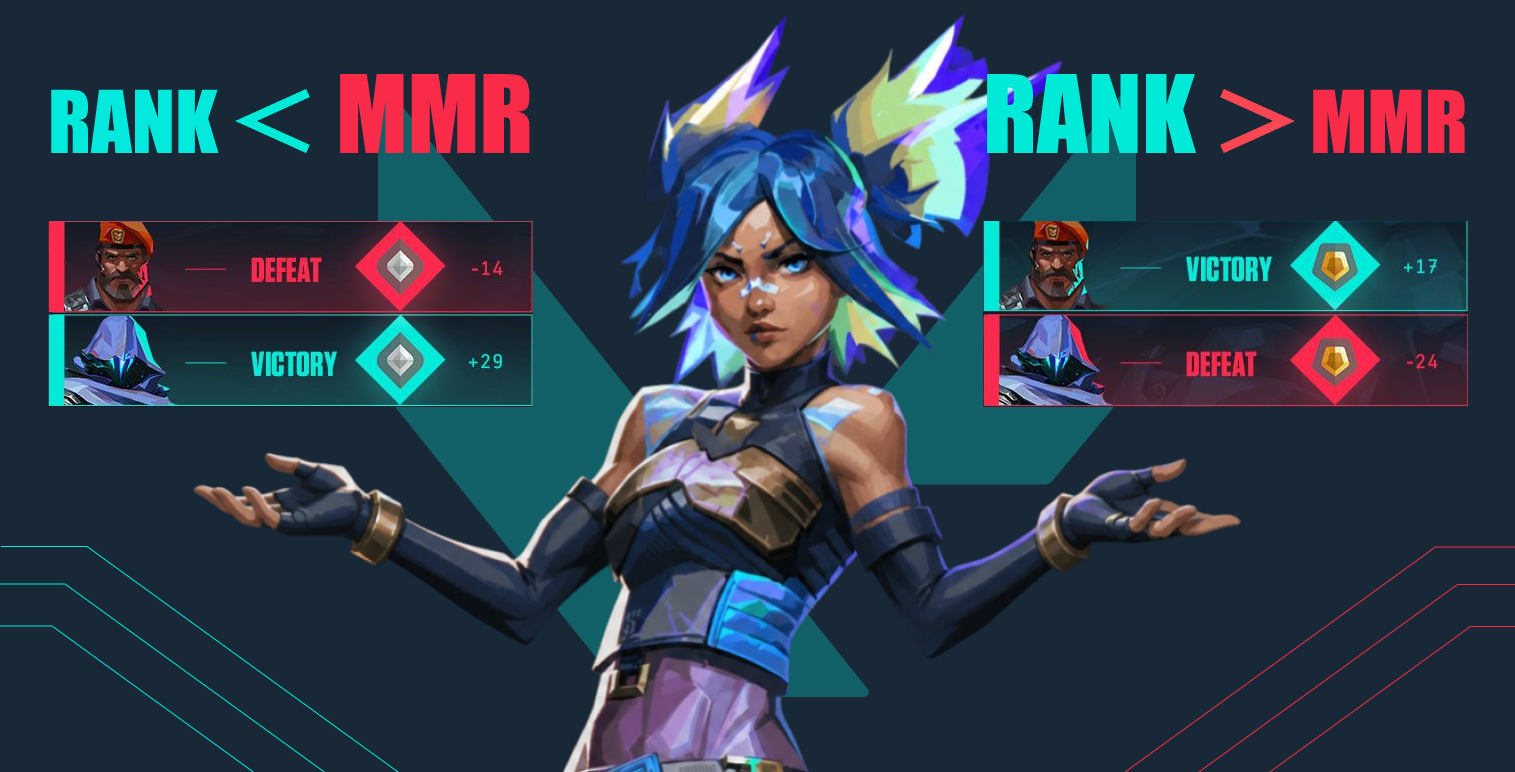
Matchmaking Rating is a hidden numerical value calculated by Riot Games’ internal algorithms. It evaluates a player’s performance across recent matches, factoring in win-loss record, individual statistics, and the MMR of opponents faced. The visible rank and the hidden MMR are not perfectly synchronized. A player with high MMR relative to their visible rank gains more RR for wins and loses less RR for defeats. Conversely, a player whose MMR is lower than their rank experiences reduced RR gains. This mechanism prevents players from maintaining a rank through lucky streaks or inflated performance against weak opponents. When a player faces opponents two or three tiers above their visible rank, it indicates their MMR has surpassed their displayed rank.
Why Winning Does Not Always Give the Same RR
RR rewards vary significantly between matches even when the outcome is identical. Several factors influence the final RR amount. The MMR difference between teams is the primary determinant. Defeating a team with a higher average MMR yields greater RR. Individual performance metrics — including combat score, first bloods, assists, and utility usage — also contribute. A player who consistently achieves high combat scores during a win will receive more RR than a bottom-fragging teammate. Losing streaks amplify RR losses; winning streaks amplify RR gains. The system accelerates adjustments for players whose performance contradicts their current rank, aiming to place them at their appropriate level as quickly as possible.
Common Reasons Players Get Stuck in Valorant
Players frequently plateau at a specific rank for reasons unrelated to raw aim. Inconsistent performance — characterized by alternating high-impact matches with low-impact games — prevents sustained RR accumulation. Poor communication with teammates reduces coordination during critical rounds. Strategic errors such as repetitive peeking patterns, inability to adapt to enemy economy, and failure to rotate when map control shifts create exploitable weaknesses. Emotional play following consecutive losses leads to tilt, which degrades decision-making and reduces win probability. Many players switch agents between matches without mastering any single role. Developing proficiency with one or two agents enables consistent performance. External analysis of individual mistakes accelerates improvement. Some players find that personalized feedback from services such as Valorant Coaching helps identify recurring errors that are difficult to recognize during live play.
What Affects Your Rank Progress?
| Factor | Impact on Climbing |
|---|---|
| Win rate | Very High |
| Hidden MMR | Very High |
| Consistency | High |
| Team communication | High |
| Agent mastery | Medium-High |
| Aim | High |
| Game sense | Very High |
| Number of matches played | Medium |
| Mental stability | Medium-High |
Skills That Matter More Than Aim
Precision shooting is necessary at higher ranks but insufficient on its own. Positioning determines how often a player has advantageous duels. Good positioning increases survival rate and creates opportunities for multi-kill rounds. Ability usage defines agent-specific matchups. Understanding opponent ultimate economy and timing ability usage accordingly can secure rounds without firing a single bullet. Economy management ensures the team has appropriate weaponry during force-buy and full-buy rounds; poor economy decisions force disadvantageous engagements. Team coordination during post-plant situations, retakes, and map rotations often determines round outcomes. Statistical analysis of high-rank matches consistently demonstrates that decision-making quality correlates more strongly with win rate than aim accuracy.
Building Consistency
Consistent performance requires structured practice and self-analysis. Pre-match warm-up routines — including aim trainers and deathmatch sessions — prime coordination before ranked games. Maintaining consistent crosshair placement reduces reaction time requirements during encounters. Recording and reviewing match footage reveals positioning errors, crosshair placement mistakes, and failed rotation decisions that are invisible during play. Focusing on one or two specific mistakes per session yields faster improvement than attempting to fix all weaknesses simultaneously. Players who play more than four consecutive competitive matches often experience diminished decision-making quality; session breaks restore focus. Tracking personal performance data over multiple sessions identifies patterns that would otherwise remain unrecognized.
Tips for Climbing Faster in Valorant
Select three or fewer agents to master. Playing the same agents develops muscle memory for ability usage and ultimate economy. Play during peak population hours when matchmaking pools are largest, reducing variance in teammate and opponent quality. Review post-match statistics to identify specific weaknesses such as low first-blood rate or poor economic management. Absorb losses without altering playstyle; aggressive tilt adjustments reduce win probability. Maintain a minimum of one hour of focused practice per day outside competitive queue time. Players who have limited time for consistent ranked progression sometimes use Valorant Rank Boost services to achieve specific seasonal goals or unlock higher-tier rewards. The decision to use external assistance depends on personal time constraints and competitive ambitions.
Setting Realistic Goals
Progression through Valorant’s rank system is a gradual process that requires sustained effort over multiple weeks or months. Understanding the mechanics of MMR, RR calculation, and performance evaluation allows players to optimize their approach. Improvement occurs at different rates depending on available time, prior experience, and learning efficiency. Players who prefer self-directed advancement benefit from structured practice and regular performance analysis. Others supplement their efforts with Valorant Rank Boost or Valorant Coaching services to accelerate progress or reach specific targets. The most effective long-term strategy combines technical improvement with tactical understanding, and applying that knowledge consistently across competitive matches.
F.A.Q
1. What are the main factors that determine my Rank Rating (RR) gains and losses?
Your RR change after a match is primarily determined by the result (win/loss) and your personal performance, measured by your Match MVP (Most Valuable Player) rating. Winning is the most critical factor. A win with a high MVP rating yields the highest RR gain, while a loss with a poor performance results in the largest RR loss. The system also considers the expected outcome based on your team's average MMR (Matchmaking Rating) versus the enemy's. If you win against a team the system predicted you would lose to, you gain more RR. Conversely, losing a favored match leads to a larger RR penalty. Consistency is key; performing well across multiple matches signals to the system that you deserve a higher rank.
2. What is the difference between my visible rank and my hidden MMR?
Your visible rank (e.g., Gold 2) is a public representation of your skill, while your hidden MMR is the system's internal, more fluid measure of your true skill level. MMR changes faster than your visible rank. The system uses your MMR to find fair matches and to determine how much RR to award or deduct. If your MMR is higher than your visible rank (e.g., you're on a win streak), you will gain more RR per win and lose less per loss, accelerating your climb. This is often called "ranked confidence." If your MMR is lower, you'll experience slower progression, as the system believes you are already at or above your appropriate skill level.
3. How does the performance bonus work, and how can I maximize it?
The performance bonus is extra RR awarded for exceptional individual play in a winning match. It is heavily tied to your Match MVP rating, which is calculated from your combat score (kills, deaths, assists), multi-kills, first bloods, and clutch situations. Simply topping the leaderboard with kills is not always enough; impactful rounds and utility usage are also valued. To maximize this bonus, focus on rounds that swing momentum: securing first blood, winning clutches (1vX situations), and using your agent's abilities effectively to support the team. This bonus is most significant in lower ranks and diminishes as you climb, where the win itself becomes the dominant factor.
4. Why do I sometimes rank up after a loss or rank down after a win?
This occurs due to the interaction between your visible RR and your hidden MMR. If you lose a match but perform exceptionally well (very high combat score, Match MVP), your RR loss may be minimal (e.g., -5 RR). If you were already at 90/100 RR in your rank, losing only 5 RR would not demote you. More importantly, such a performance can significantly boost your hidden MMR. In a subsequent win, the system, now more confident in your skill (higher MMR), may award enough RR to skip a division or rank up immediately. Similarly, a win with very poor performance might grant only +10 RR, which could be insufficient to prevent a demotion if you were at 0 RR and facing a demotion shield.
5. What is the most effective mindset for climbing ranks consistently?
The most effective mindset is one of focused improvement over obsessive winning. Treat each match as a learning opportunity, not just an RR transaction. Key elements include: Vod Review: Regularly watch your own gameplay to identify repeating mistakes in positioning, crosshair placement, and decision-making. Mentality Management: Avoid tilt-queueing after losses. Take breaks to reset. Communication: Use pings and concise callouts; a coordinated team has a major advantage. Agent Mastery: Deeply understand 2-3 agents in your role rather than playing everyone superficially. This allows you to master line-ups, timings, and role-specific contributions. Consistency over 100 games, not pop-off performances in 10, is what leads to lasting rank advancement.
6. How impactful are win and loss streaks on my rank progression?
Streaks have a substantial impact on your hidden MMR, which in turn affects your RR gains. A win streak (3+ wins) signals to the system that you are undervalued. It will rapidly increase your MMR, leading to progressively higher RR gains per win (+25, +28, +30) and reduced RR losses. This can result in rank skips (e.g., jumping from Silver 3 to Gold 2). Conversely, a loss streak tanks your MMR, causing you to gain less RR for future wins and lose more for losses. This is the system's way of quickly adjusting your rank to what it believes is your current skill level. Breaking a loss streak is crucial, often requiring a short break or a change in gameplay approach.
7. Is it better to duo queue or solo queue for climbing?
This depends on your goals and partnership. A reliable duo queue partner with good communication and complementary agent pools can provide a significant advantage. You guarantee at least one coordinated teammate, enabling powerful synergies (e.g., duelist + initiator). This can lead to more consistent wins. However, solo queue forces you to adapt to different playstyles and can be a more accurate test of your individual skill and ability to lead random teams. If you duo queue, ensure your partner shares your commitment to improvement and a positive mindset. A toxic or inconsistent duo can hinder your progress more than any random teammate.
8. How important is agent selection and role flexibility for climbing?
While mastering a main role is critical, strategic flexibility is a powerful asset. One-tricking a single agent can be detrimental if that agent is picked or doesn't suit a map's meta. You should aim to master 2-3 agents within your primary role (e.g., Controller) and have 1-2 agents in a secondary role (e.g., Initiator) you can play competently. This allows you to fill team composition gaps, which is vital for creating a balanced team capable of executing diverse strategies. Understanding the basics of all roles also makes you a better player, as you can predict enemy actions and support your teammates more effectively.
9. How do Acts and Episodes affect my rank, and what is the best way to place in a new Act?
At the end of an Act, your rank is soft reset. You must play one placement match to reveal your new rank, which is heavily influenced by your hidden MMR from the previous Act, not your final visible rank. Winning your placement match can place you slightly higher. The start of a new Episode involves a harder reset, placing everyone closer to the median rank. The best strategy for placements and a new Act is to treat them like any other competitive match—focus on fundamentals and teamwork. Do not place excessive pressure on these few games. Your hidden MMR history carries significant weight, so long-term consistency will quickly pull you toward your true rank after a handful of games.