Valorant Aim and Skill Guide: How to Improve Faster
Many players believe that raw aiming ability determines their rank in Valorant. This assumption leads to frustration when mechanical skill fails to translate into consistent victories. The reality of competitive play involves multiple interconnected abilities that together create a complete player. Valorant aim and skill represent only part of the equation. Understanding the full spectrum of required valorant competencies allows players to identify weaknesses and target improvement effectively. This guide examines the skills required for rank advancement and provides actionable methods for developing both mechanical and tactical abilities.
What Skills Matter in Valorant
Valorant skills extend far beyond shooting accuracy. High-ranked players demonstrate proficiency across several distinct categories. Each category supports the others. Neglecting any single area creates a ceiling on overall performance. Understanding how to get better valorant requires recognizing these components:
- Aim (mechanical accuracy): The ability to land shots consistently. This includes crosshair placement, recoil control, tracking, and flick shots. Aim determines kill potential in direct engagements.
- Game sense (tactical awareness): The ability to read rounds, predict enemy movements, and make informed decisions. This includes understanding opponent economy, ultimate availability, and typical player behavior patterns.
- Positioning (spatial control): The ability to hold advantageous angles, minimize exposure, and rotate safely. Proper positioning reduces the number of aim duels required and increases survival rates.
These three categories form the foundation of competitive skill. A player with exceptional aim but poor game sense loses rounds to smarter opponents. A player with strong game sense but weak aim fails to capitalize on tactical advantages. The complete player develops all three areas simultaneously.
Aim Mechanics in Valorant Explained
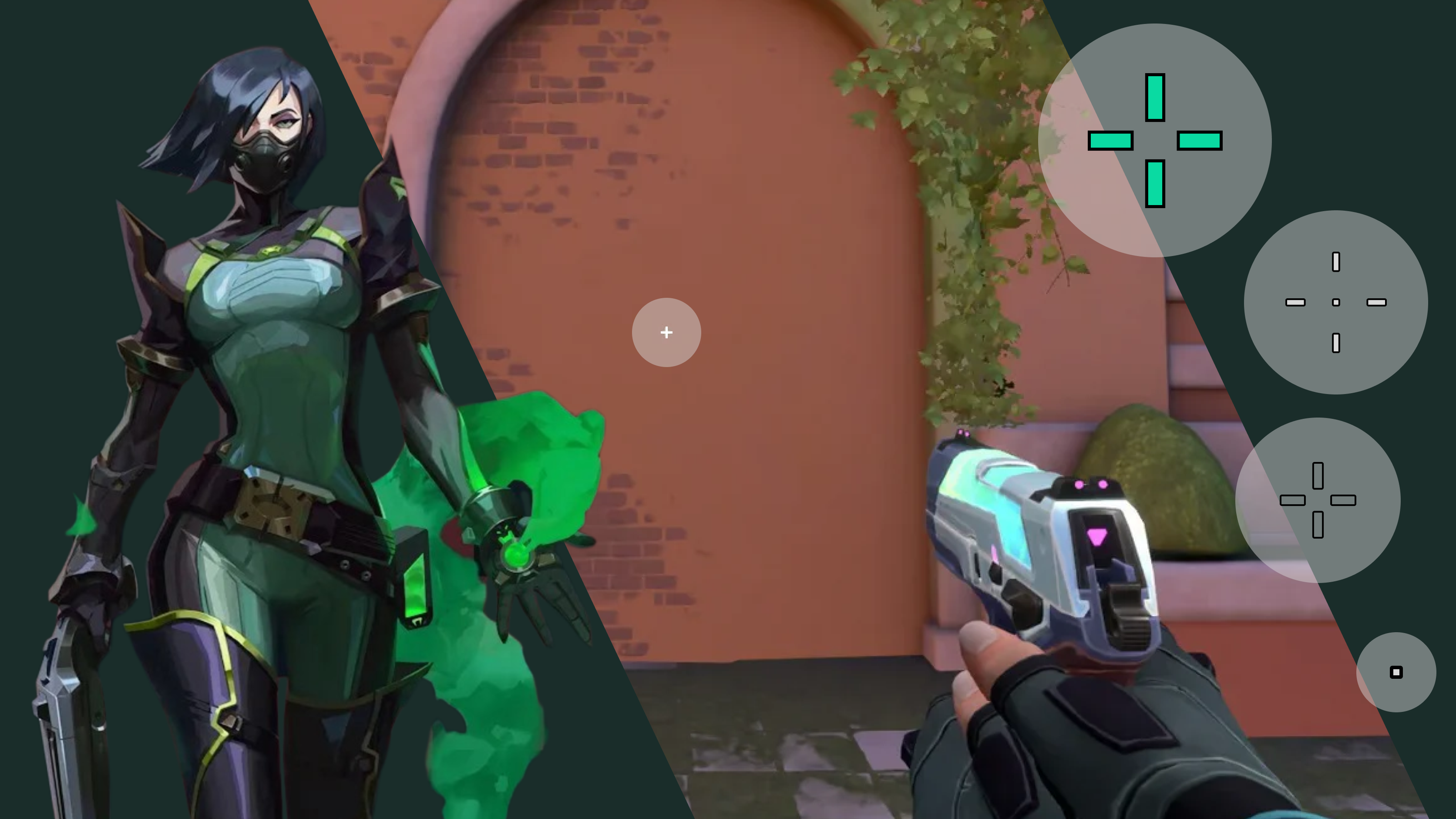
Valorant aim consists of several mechanical sub-skills that function together during gameplay. Mastering each component creates reliable shooting performance. A proper valorant aim guide must address these fundamentals:
Crosshair placement: The most critical aiming mechanic. Keeping the crosshair at head level and pre-aiming common holding angles eliminates the need for large adjustments during engagements. Proper crosshair placement reduces reaction time requirements and increases first-shot accuracy.
Recoil control: Valorant weapons spray patterns follow predictable trajectories. Learning to pull down and adjust horizontally based on weapon-specific spray patterns allows players to land multiple shots during sustained fire. The Vandal and Phantom have different recoil behaviors requiring separate practice.
Tracking: Following a moving target while maintaining accuracy. This skill matters most against strafing opponents and during spray transfers between enemies. Tracking ability determines effectiveness in extended duels and multi-kill scenarios.
These mechanics form the crosshair placement and recoil control foundation that separates consistent aimers from inconsistent ones.
How to Improve Aim Fast in Valorant
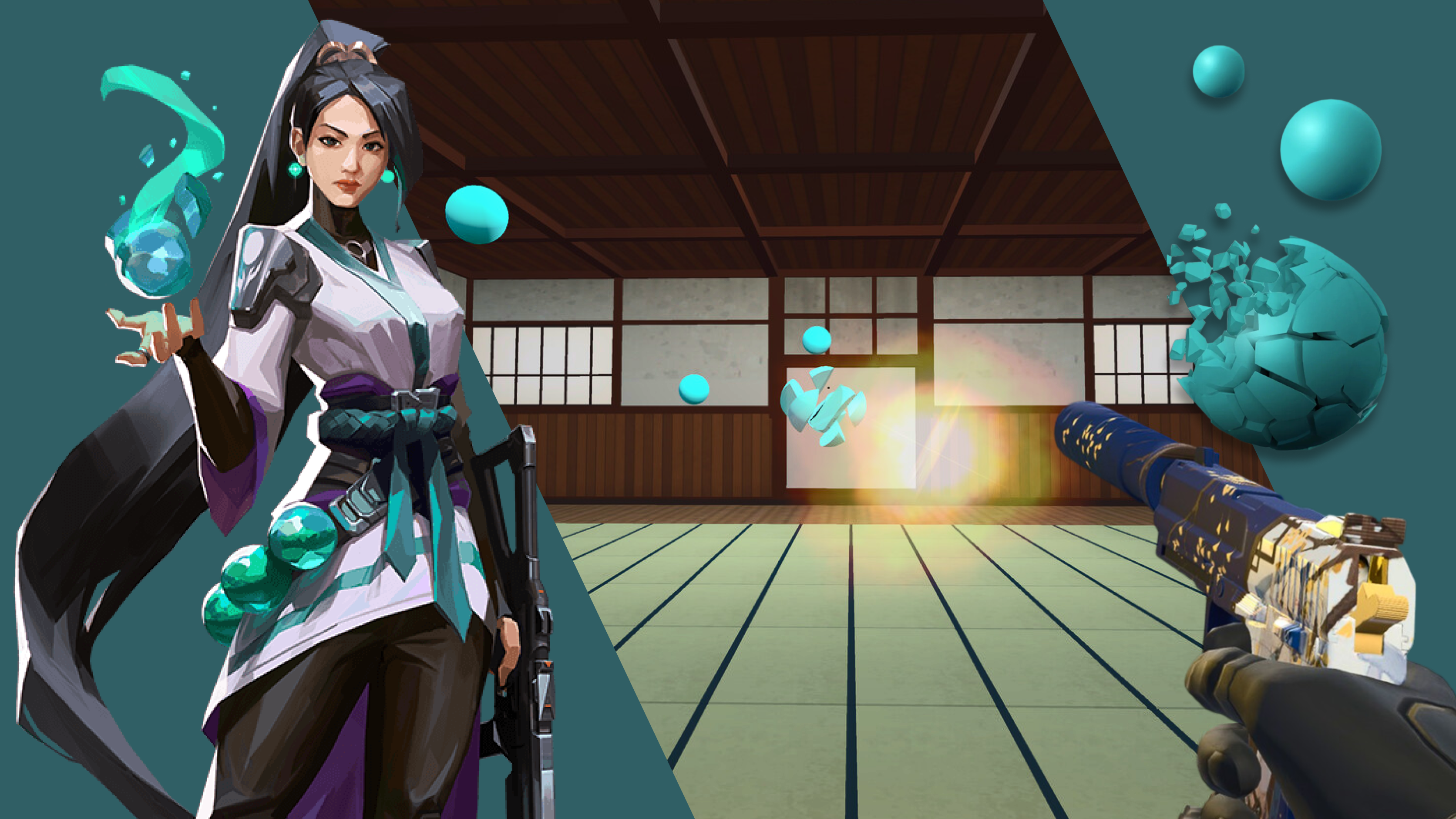
Players seeking how to improve aim in valorant should adopt structured practice methods rather than relying solely on ranked matches. The most effective approach combines deliberate training with practical application. Valorant aim training follows a proven progression:
- Aim trainers (external software): Dedicated aim training programs provide controlled environments for practicing specific mechanics. Programs like Aim Lab or KovaaK's allow players to drill flicking, tracking, and target switching without the variables of live matches. Fifteen minutes daily produces measurable improvement within two weeks.
- Deathmatch mode: Valorant's Deathmatch mode provides continuous fighting against real players. This mode eliminates downtime and forces constant aim duels. Playing three Deathmatch rounds before ranked sessions warms up mechanics and reinforces crosshair placement habits.
- Daily routine consistency: Short daily practice outperforms occasional long sessions. A twenty-minute daily routine produces better results than a two-hour session once per week. Muscle memory develops through repetition, not intensity.
Game Sense and Decision Making in Valorant
Valorant game sense describes a player's ability to process information and make correct decisions during matches. This skill develops through experience but accelerates with deliberate analysis.
Game sense operates on multiple information sources. Team communication reveals enemy positions and planned rotations. Sound cues indicate nearby movements and ability usage. Minimap updates show teammate positions and detected enemies. Economic tracking predicts whether opponents can afford rifles or must use pistols.
Decision making flows from this information. A player with strong game sense knows when to rotate based on enemy absence at a site. They recognize when to save weapons rather than force a lost round. They predict ultimate usage timing and play around enemy abilities.
The distinction between reactive and proactive decision making defines higher ranks. Reactive players respond to events. Proactive players anticipate events and position accordingly.
Positioning and Movement in Valorant
Valorant positioning determines how often players face fair fights versus unfavorable ones. Proper positioning reduces the number of aim duels required and increases survival rates.
Common positioning errors include standing in open spaces, peeking angles without cover, and failing to clear corners systematically. These mistakes create situations where opponents have information advantage or positional advantage.
Correct positioning involves holding tight angles that minimize exposure. Players should position near cover that allows retreat after taking damage. Movement should be deliberate rather than random. Peeking should utilize shoulder peeks to gather information before committing to engagements.
Movement mechanics support positioning. Counter-strafing stops momentum instantly for accurate shooting. Jiggle peeking provides information while minimizing risk. These movement skills combine with positioning to create a defensive framework that protects players from unexpected engagements.
Best Practice Routine (Daily Plan)
A valorant practice routine should balance warm-up mechanics with competitive application. The following daily plan requires approximately one hour total:
- 10 minutes warm-up: Enter the practice range. Eliminate 50 stationary bots focusing on crosshair placement. Then eliminate 50 strafing bots practicing tracking. Finish with 50 elimination targets practicing flick shots.
- 3 Deathmatch rounds: Play three consecutive Deathmatch matches. Focus on headshot accuracy rather than winning. Use each round to practice different weapons. First round Vandal, second round Phantom, third round Sheriff or Guardian. This practice covers multiple weapon mechanics.
- Ranked matches: Apply practiced mechanics in competitive matches. Play two to three ranked games while consciously focusing on positioning and decision making. Review each death by identifying the cause: mechanical error, positioning mistake, or decision failure.
Why Players Get Stuck in Rank in Valorant
Valorant rank stuck situations occur when players reach a skill plateau. The current skill level matches the rank environment, creating equilibrium where wins and losses balance.
Primary reasons for stagnation include:
- Skill ceiling: The player's current mechanical and tactical abilities cannot support higher rank competition. Improvement requires targeted practice on specific weaknesses.
- Repeated errors: Players develop habits that work at their current rank but fail at higher levels. These might include predictable positioning, slow rotations, or utility waste.
Breaking through plateaus requires honest self-assessment and structured improvement. Random play without analysis reinforces existing patterns rather than developing new capabilities.
How Boosting Fits Into Skill Progression
Valorant boost services provide accelerated rank advancement for players who meet certain conditions. These services transfer ranked progression from player to professional.
Valorant boosting addresses specific scenarios. Players who consistently perform well but cannot play enough matches to climb may use boosting to reach their deserved rank. Players who want cosmetic rewards from higher ranks without the time investment also consider boosting.
The key distinction remains clear: boosting does not replace skill development. A boosted player at a higher rank faces opponents with stronger fundamentals. Without corresponding improvement, performance at the new rank suffers.
The optimal approach combines targeted skill development with appropriate rank progression. Players should develop their abilities while also achieving the rank that matches their current performance level. This balance ensures sustainable improvement and meaningful competition.
Improving aim and overall skill in Valorant takes time, structured practice, and consistency. Many players plateau because they train without understanding what actually impacts their performance in real matches. That’s why some players combine practice with coaching or boosting to accelerate their rank progression.
Valorant Solo/Duo Rank Boost
Buy NowF.A.Q
1. What skills are needed to rank up in Valorant?
Ranking up in Valorant requires a combination of aim, game sense, positioning, and decision-making. Mechanical skill alone is not enough for consistent rank improvement.
2. How important is aim in Valorant?
Aim is important in Valorant, but it is only one part of overall performance. Players with strong positioning and game sense can outperform players with better aim.
3. How can I improve my aim in Valorant?
Improving aim in Valorant requires consistent practice, crosshair placement, and proper warm-up routines. Focused training is more effective than playing matches without purpose.
4. Why am I not ranking up in Valorant?
Players often fail to rank up in Valorant due to inconsistent performance, poor positioning, and lack of game awareness. Identifying mistakes is key to improvement.
5. What is the fastest way to rank up in Valorant?
The fastest way to rank up in Valorant is to improve consistency across all skills, especially positioning, decision-making, and teamwork.