Beginner to Pro Guide: How to Progress Fast in Marvel Rivals
Marvel Rivals is not a game you master overnight. It is a team-based PvP shooter that demands mechanical precision, tactical awareness, and coordinated teamwork. Many new players download the game, jump into matches, and wonder why they struggle against opponents who seem to move and react faster. The truth is that progression in Marvel Rivals follows a logical path—one that rewards deliberate learning over raw playtime. This guide outlines exactly what to focus on during your first month, from understanding core roles to refining advanced gameplay, so you can climb ranks with confidence instead of frustration.
Getting Started: Understanding What Marvel Rivals Is Really About
Marvel Rivals is fundamentally a team-driven shooter where individual eliminations matter less than objective control and role execution. Each match unfolds around capture points or payloads, and victory depends on how well six players coordinate their abilities. New players often rush into ranked matches without grasping this core principle, only to discover that aggressive solo plays lead to repeated defeats. The first ten hours should be dedicated to learning the map layouts, understanding ability cooldowns, and experimenting with different roles in casual or practice modes. Do not worry about your rank during this phase. Focus on internalizing the game’s rhythm: when to push, when to retreat, and how abilities interact across the team composition.
Choosing Your First Main Heroes
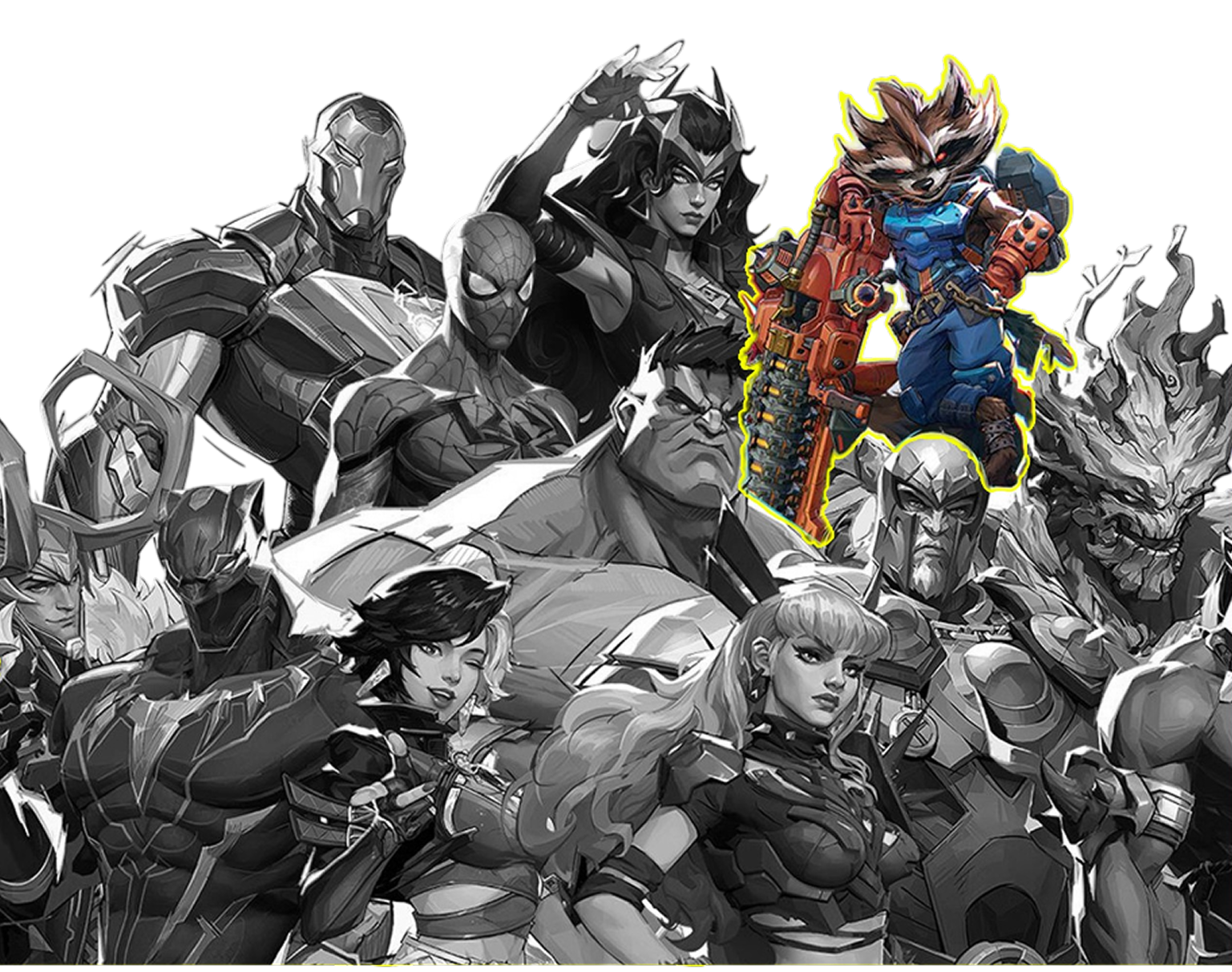
Trying to play every hero in Marvel Rivals is a common mistake that dilutes your learning. Instead, select two or three characters that match your preferred playstyle and stick with them until their mechanics become second nature. For newcomers, heroes with straightforward kits and forgiving aim requirements offer the best start. Characters like Rocket Raccoon or Groot provide clear role identity without demanding pinpoint accuracy. The key is consistency—a deep understanding of one hero’s cooldowns, damage breakpoints, and movement patterns generates far more value than superficial familiarity with ten different picks. As you improve, you can expand your pool, but early specialization builds the muscle memory that carries you through higher ranks.
Learn Your Role Before Learning Advanced Mechanics
Every match requires a balanced composition of three roles: damage dealers, tanks, and supports. Damage heroes focus on eliminating threats and pressuring the enemy backline. Tanks absorb damage, create space, and control key map areas. Supports heal teammates and provide utility like shields or crowd control. New players often neglect their role’s primary duty—a damage hero chasing kills instead of contesting the objective, or a tank frontline that retreats too early. Understanding your role’s responsibilities matters more than landing every shot. A support who keeps teammates alive through a team fight contributes more than a damage dealer with high eliminations but poor positioning. Master your role’s fundamentals, and wins will follow even if your aim is average.
Improving Your Core Gameplay Skills
Core skills in Marvel Rivals break down into aiming, positioning, cover usage, map awareness, and ability management. Aiming develops gradually through consistent practice—do not expect instant improvement. Focus on crosshair placement at head height and tracking enemy movements during engagements. Positioning requires understanding sight lines and high-ground advantage; a damage dealer standing in the open invites deletion. Cover usage is non-negotiable: peek corners, retreat behind walls during cooldowns, and never stand still. Map awareness means tracking the objective timer and enemy respawn waves. Ability management—holding your ultimate for team fights instead of wasting it on a single target—separates average players from strong ones. These skills compound over time, so play regularly and review your death replays to identify specific mistakes.
Understanding Ranked Progression
Ranked mode unlocks after reaching a certain level, but rushing into it unprepared leads to demoralizing losses. The rating system rewards consistency over flashy plays—a player who dies less and contributes to objectives climbs faster than one with high kills but frequent deaths. Each rank tier requires multiple wins to advance, and losing streaks are part of the learning curve. Many players become discouraged after three consecutive defeats, but these matches reveal weaknesses in your decision-making. Review why you lost: was it poor positioning, a wasted ultimate, or ignoring the objective? Treat each loss as diagnostic data. Stable growth happens when you focus on reducing errors rather than obsessing over rank icons.
Common Mistakes That Slow Down Progress
The most frequent errors among beginners include frequently switching heroes mid-match, playing in isolation from the team, engaging fights without support, ignoring objective points, and skipping post-match analysis. Switching heroes every life prevents you from learning any single character’s depth. Playing alone means you feed enemy ultimates without team backup. Aggressive pushes without your tank or support result in staggered deaths that snowball into lost rounds. Ignoring the objective—chasing kills instead of contesting the payload—loses games even with superior eliminations. Finally, not reviewing your own mistakes keeps you repeating them. Correct each error by committing to one hero per match, staying near teammates, timing engagements with your support, and always playing the objective.
How Experienced Players Improve Faster
Seasoned players accelerate their improvement through deliberate practice. They record their matches and rewatch key team fights to understand positioning errors. They follow patch notes to track hero buffs and nerfs, adjusting their pool accordingly. They study top players through replays or streams, noting specific techniques like ability combos or flank routes. They gradually expand their hero pool only after achieving mastery with their initial picks. The difference is not playtime alone—it is the quality of practice. Thirty minutes of focused aim training or reviewing a single match recording teaches more than three hours of autopilot queueing. Watching professional tournaments also reveals macro-level strategies like ultimate economy and map rotations that translate directly into your own games.
Different Ways to Reach Your Goals
Every player in Marvel Rivals pursues different objectives. Some want casual fun with friends, others aim for high-ranked seasonal rewards, and a few seek competitive glory. The most sustainable path is independent practice—learning through trial, error, and incremental improvement. However, time constraints sometimes make this difficult. Players who need faster access to locked content or a specific rank may consider external services like Marvel Rivals Rank Boosting, Account Boosting, or Coaching. These tools can provide a shortcut, but they should supplement, not replace, your own growth. The deepest satisfaction comes from understanding the game’s mechanics yourself: knowing why you win, why you lose, and how to adapt. Whether you grind solo or seek assistance, the core lesson remains—progress is earned by mastering fundamentals, learning from defeats, and playing with intention. Start with the basics, build your foundation, and every match will teach you something valuable.
F.A.Q
1. How do I choose my first main hero effectively?
Selecting a main hero should be based on your preferred role and playstyle. For beginners, it is recommended to start with a Vanguard or Duelist that has a forgiving skill floor. Heroes like Hulk (Vanguard) or Storm (Duelist) offer straightforward ability rotations and high survivability. Analyze the current meta by reviewing patch notes and top-tier leaderboard picks—characters such as Black Panther or Squirrel Girl are often praised for balanced kit performance. Avoid choosing a hero solely based on aesthetics; instead, test each hero in the Practice Range to confirm their combo flow and ultimate ability timing.
2. What are the primary roles in Marvel Rivals, and which should I focus on first?
The three core roles are Vanguard (tank/initiator), Duelist (damage dealer), and Strategist (healer/support). For new players, starting as a Vanguard is recommended because these heroes typically have higher health pools and simpler mechanics, allowing you to learn map positioning and team fight awareness without immediate pressure. Duelist requires precise aim and cooldown management, while Strategist demands constant awareness of teammate health and enemy flanking routes. Once you achieve basic competence in one role, gradually expand to another to understand team dynamics fully.
3. Which gameplay skills are most critical for fast progression?
The most crucial skills are map awareness, ability cooldown tracking, and ultimate economy. Map awareness means knowing high-ground positions, health pack locations, and choke points on every map. Cooldown tracking involves monitoring when key enemy abilities (e.g., displacement or stun moves) are used, so you can punish their downtime. Ultimate economy refers to managing when to use your own ultimate versus saving it for a team fight counter. Practicing “peeking” from cover to avoid damage, and using the ping system to communicate enemy positions, will dramatically improve your survival rate.
4. What are the most common mistakes beginners make?
The most frequent error is overextending—pushing too far ahead of your team without backup, which results in easy deaths. Another mistake is ignoring objective priorities, such as focusing on eliminating enemies rather than capturing or defending the point. Beginners also waste ultimates by using them when outnumbered or when the enemy team can easily counter with their own shields or dodges. Finally, many players neglect to adjust their hero picks based on enemy team composition; sticking to a single hero regardless of counter-picks leads to repeated losses.
5. How do I start ranked progression effectively?
Before entering ranked, ensure you have at least two heroes in your chosen role at a comfortable skill level. Focus on mastering one map in Quick Play to learn its specific pacing and flank routes. In ranked, communicate early (via voice or text) about your intended hero and role. Avoid playing after multiple consecutive losses to prevent tilt. Track your win rate with each hero using the in-game statistics; if a hero drops below 45% win rate over 20 games, consider switching. Progression from Bronze to Silver is achievable by simply minimizing deaths and playing near your team.
6. When should I switch heroes during a match?
Switch heroes if you are being hard-countered by an enemy’s abilities (e.g., your melee hero is countered by a ranged area denial hero like Magneto). Also switch if you are dying more than three times in the first minute of a round—this indicates a fundamental mismatch. A good rule is to reassess after the first team fight loss; if your ultimate fails to secure a kill, consider a change. Always coordinate switches with your team to maintain role balance.
7. How important is team composition, and what comp is best for beginners?
Team composition is vital; a balanced team with one Vanguard, two Duelists, and two Strategists is the standard. Beginners should avoid stacking three Duelists, as this leaves the team vulnerable to sustain. The simplest effective comp is a “brawl” composition where the Vanguard pushes forward with close-range Duelists, while Strategists provide healing from behind. Avoid complicated combo comps (e.g., dive-heavy or poke-heavy) until you have at least 50 hours of experience, as they require precise timing and coordination.
8. How do I counter popular heroes in the current meta?
If the enemy team has a strong Hulk, pick a ranged Duelist like Iron Man to keep distance. Against Black Panther who relies on dashes, a Strategist like Mantis with sleep ability can neutralize his engages. For Magneto, use fast-movement heroes like Spider-Man to dodge his slow projectiles. Always check the scoreboard after each death to see which enemy hero is most threatening; then either switch to a direct counter or request a teammate to do so. Data from recent patches shows that Storm and Squirrel Girl have high win rates, so learn their weaknesses: Storm is vulnerable when Airborne, and Squirrel Girl lacks burst escape.